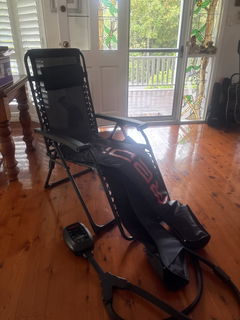
REDi | R2 Compression Boots
Heavy at 6pm, sore for two days after a hard run. Twenty minutes in the boots tonight: lighter legs now, less sore tomorrow.
Heavy at 6pm, sore for two days after a hard run. Twenty minutes in the boots tonight: lighter legs now, less sore tomorrow.

Used daily in our rehab clinic · Used by AFL, CrossFit and HYROX athletes
How it works
What's in the box
- R2 compression boots, pair (125cm, one size, selectable zones)
- Wireless controller with rechargeable battery (4–6 hours)
- Charger and AU plug
- Carry backpack, purpose-built for the boots
Specifications
- Technology: REDi Perfuse™. Sequential pneumatic compression
- Chambers: 8 overlapping, foot to hip
- Pressure range: 30–260 mmHg
- Patterns: 6 inflation patterns
- Session timer: 5–99 min (20–30 recommended)
- Battery: 4–6 hours, wireless
- Sizing: one size: 125cm, selectable zones · fits 5'0" to 6'6"
- Warranty: 2-year, Australian support
- In the box: boots (pair), controller, carry backpack
Shipping, returns, warranty
Designed to support general wellness and recovery routines. Not intended to diagnose, treat, cure, or prevent any disease.
What $899 gets you
Everything is in the box. Nothing else to buy, and nothing to size. The boots fit 5'0" to 6'6" and you switch off the chambers you do not need.
or 4 × $224.75 with Afterpay · 60 days to decide
What it does
The best-supported effect of compression boots. A 2024 meta-analysis of 17 trials found next-day soreness was lower after 20–30 minutes of sequential compression.
Less heaviness and fatigue in the legs after hard training or a long shift on your feet.
Nurses, tradies, parents on their feet all day. Legs that are heavy at 6pm are the same physiology as legs after a 20 km run.
The chambers do what your calf muscles do when you walk: squeeze the leg from the foot up and push blood and fluid back toward the trunk. Twenty minutes of muscle pump, sitting down.
One boot fits 5'0" to 6'6". Switch off the chambers you do not need. Share them.
Every type of product we sell is used daily in our own rehab clinic. Used by CrossFit Games, HYROX and AFL athletes. 2-year warranty, spares and support answered from Australia.
The athletes who train with REDi
Same brand, same clinic, same standards. If it holds up to a Games season, it'll hold up to your Tuesday.


When to use it
Twenty to thirty minutes, sitting still. The boots do the walking your legs are too tired to do.
20–30 minutes while you eat. Moderate pressure, foot-to-hip pattern.
Boots on when you get home. Ten hours standing ends on the couch, not on your feet.
Boots on after the kids are down. Twenty minutes on the couch, then bed.
Saturday game, Sunday boots. They fit a 12-year-old with the top zones off.
How it works: the muscle pump, done for you
When you walk, your calf and thigh muscles squeeze the deep veins in the leg and push blood back up toward the heart. That is the muscle pump, and it is the main thing driving venous return from the legs. Sit still after a hard session or a ten-hour shift and the pump stops, so blood and fluid sit in the lower leg. That is the heavy, tight feeling.
Sequential pneumatic compression does the squeeze for you. The chambers inflate one after the other from the foot up, compressing the leg in a wave that pushes blood and interstitial fluid back toward the trunk, then release so the veins refill, then repeat. Twenty minutes of that while you sit is twenty minutes of muscle pump your legs did not have to do.
Chamber by chamber from the foot up, moving blood and fluid up the leg the way walking does.
Pressure drops, fresh blood flows back into the leg, and the cycle starts again. The boots create the conditions; your body does the rest.
The best-supported effect. A 2024 meta-analysis of 17 trials found soreness ratings were lower after 20–30 minutes of sequential compression following hard exercise. Trials also report lower perceived leg fatigue and heaviness. Effects on next-day performance are smaller and mixed, which is why we say ready tomorrow, not faster.
It is not a treatment for any condition and it does not replace the training, sleep and food that do the real work. If you have a history of deep vein thrombosis, peripheral vascular disease or a current leg condition, talk to your clinician before using compression boots.
Overlapping chambers, foot to hip. No gaps.
mmHg. Light to deep.
Inflation patterns.
Battery. No power point.
How it fits your routine
Recovery only works if it gets used. This has one step: zipping in.
One size. Switch off the zones you do not need. About a minute.
Six patterns, 30–260 mmHg. Match it to how the legs feel today.
Wireless. The boots cycle and stop by themselves.
After hard sessions, or the morning after. Consistency is the whole thing.
What to compare before you buy any boots
Six things decide whether compression boots get used or end up in a cupboard. Check them on any boot you are considering. Here is where the R2 sits.
| Check | Typical consumer boots | REDi R2 |
|---|---|---|
| Chambers | 4, with gaps and pressure spikes where they meet. | 8, overlapping, foot to hip |
| Pressure range | Tops out around 100–150 mmHg. Less headroom for a heavy block. | 30–260 mmHg |
| Power | Corded, or a short battery. Tied to a wall. | Wireless, 4–6 hours |
| Sizing | Short / standard / tall. Guessing, and returns for fit. | One size, 5'0"–6'6", switch off zones |
| Warranty & support | Overseas returns queue. Nobody local to answer. | 2 years, support answered from Australia |
| In the box | Carry bag is usually an extra. | Boots, controller, carry backpack |
"Typical" describes common consumer compression boots sold in Australia; check the spec sheet of any boot you are comparing.
R2 or R3? Same job, two different boots.
Both do sequential compression from the foot up. The R2 is the heavy-duty one: bigger motor, bigger battery, more chambers, more control. The R3 is the light one: smaller, nothing attached, charge it like a phone. Pick by how you will use them, not by which is better.
Train most days, run heavy blocks, or share the boots across heights. Bigger motor, 8 chambers you can switch off, 260 mmHg, 4+ hours a charge. Lives at home or in the clinic.
Recover on the road, at the gym or in a small space. Pump and battery on each boot, nothing attached, 240 mmHg, 90–120 minutes a charge over USB. Smaller footprint, goes in a backpack.
Legs and hips, a clinic buying for clients, or still unsure. hello@redirecovery.com.au with your height and what you train for.
Who it's for
Anyone whose legs carry the day. Not just athletes.
Two sessions a day, a race block, a comp weekend. Twenty minutes in the boots between them.
Nurses, tradies, hospitality, retail. Ten hours standing. Boots on when you get home, feet up, TV on.
Flights, long drives, hotel rooms. Wireless, so it goes in the backpack and works anywhere there is a chair.
The protocol
20–30 minutes. The timer runs 5–99 minutes and the boots stop by themselves.
Start low, 30–60 mmHg. Most people settle between 80 and 150. Go higher in a heavy block.
After hard sessions. Daily is fine in a big training week. Consistency matters more than intensity.
After training is the main use. The morning after, or rest days, also work.
If you have a history of deep vein thrombosis (DVT), peripheral vascular disease, or a current condition affecting the legs, check with your clinician before using compression boots.
Jayson, exercise physiologist, Sunshine Coast.
Every type of product we sell is used daily in our own rehab clinic. If it doesn't hold up with the people I treat, it doesn't go on the site. The R2 is the boot we use in the clinic every day. I chose eight chambers and the wide pressure range because that is what I would want in the clinic, then made it available to you.
Australian warranty and support · hello@redirecovery.com.au
Questions we get asked
Does one size really fit all?
What are the 6 patterns?
What pressure should I start on?
How long should a session be?
Can I use the R2 and the Precision wrap at the same time?
Can I get cheaper boots overseas?
Is it safe to use daily?
What if I'm not sure it's right for me?
Completes the setup
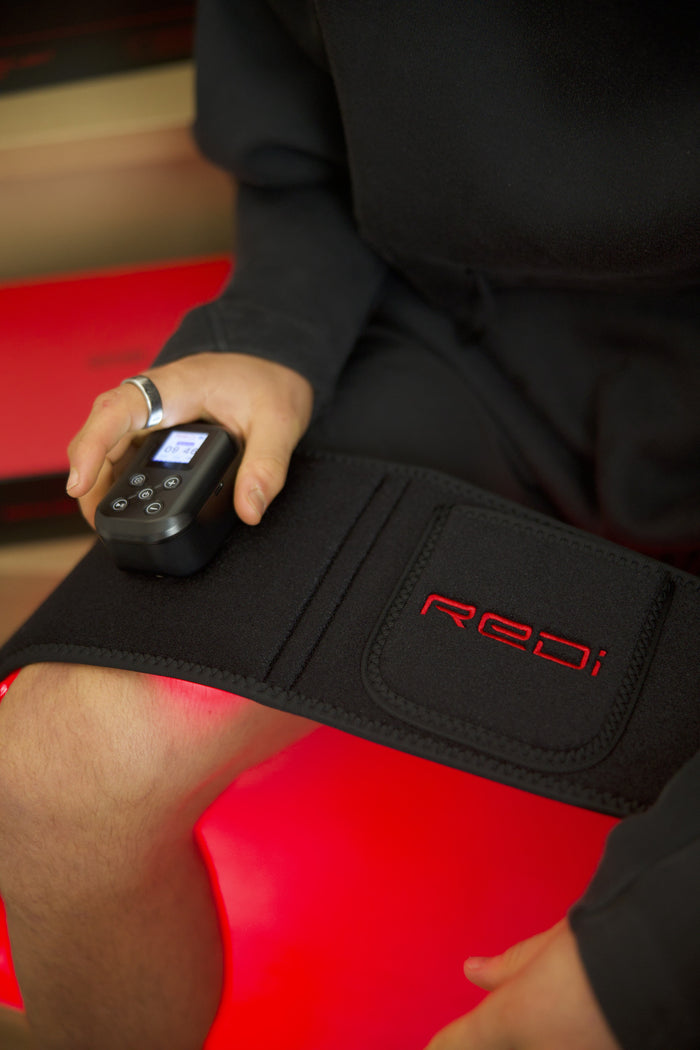
Targeted red light
REDi Anywhere Precision
Wireless red + near-infrared wrap for the back, shoulders or hips. Ten minutes while the boots run on the legs.
$449.00$337.00
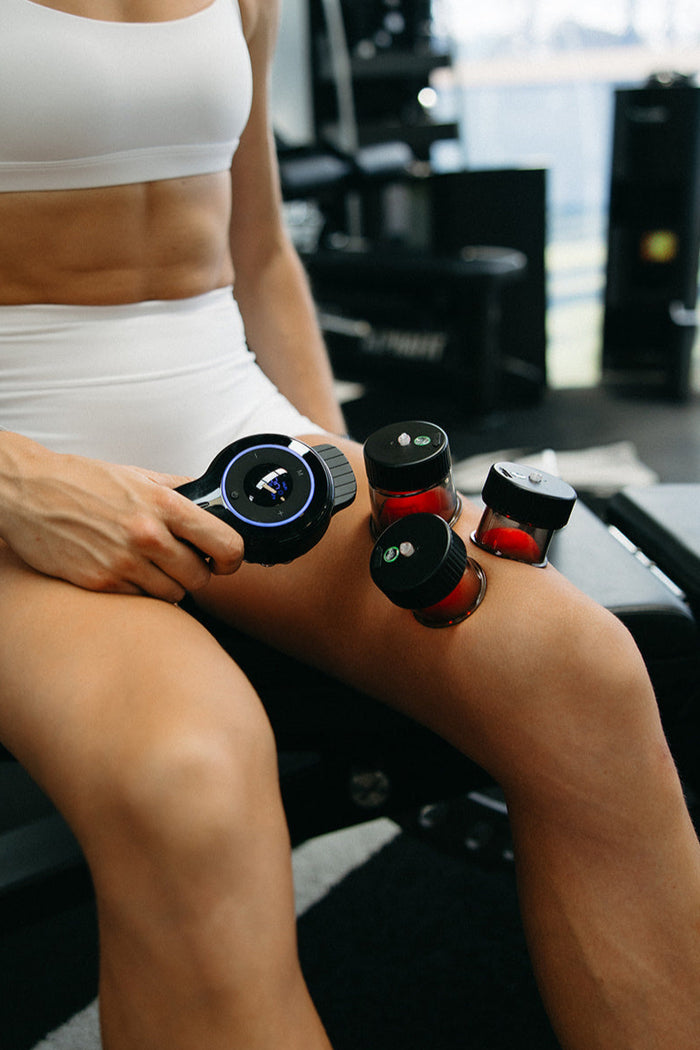
Tissue work
REDi MyoFlux 6 Cup Cupping System
Hands-on work for the spots the boots do not reach. Quads, glutes, calves, upper back.
$749.00$562.00
60 days to decide. Use it properly for at least two weeks. Not earning its place? Send it back in its packaging for a full refund. Return postage is on you.
Legs that are ready tomorrow.
Zip in, pick a pattern, let the boots finish the day for you. 60 days to decide. Be REDi.