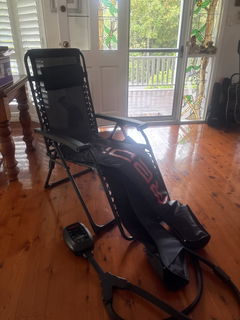
REDi R3 Wireless Compression Boots
Heavy legs, twenty minutes, nothing attached. Pump and battery on each boot: no hose, no controller box. Strap in, press once, charge them like a phone.
Heavy legs, twenty minutes, nothing attached. Pump and battery on each boot: no hose, no box. Strap in, press once.

New for 2026 · First run of 40 pairs · Launch price until 30 November
How it works
What's in the box
- R3 wireless compression boots, pair (M: under 175cm · L: over 175cm)
- Two detachable pump units with rechargeable batteries (1–2 hours per charge)
- USB charging cable
- Carry bag
Specifications
- Technology: REDi Perfuse™. Sequential pneumatic compression, hose-free
- Chambers: 4 overlapping, foot to thigh
- Pressure range: 30–240 mmHg
- Modes: 5
- Session timer: 15 / 30 / 45 min (15–30 recommended)
- Pump: detachable, on the boot, 12 L/min
- Battery: 3200 mAh per pump, 1–2 hours per charge, USB
- Memory: remembers your last setting
- Sizing: M (under 175cm, 91cm boot) · L (over 175cm, 108cm boot)
- Warranty: 2-year, Australian support
- In the box: boots (pair), two pumps, USB cable, carry bag
Shipping, returns, warranty
Designed to support general wellness and recovery routines. Not intended to diagnose, treat, cure, or prevent any disease.
What $749 gets you
Everything is in the bag: boots, both pumps, the cable. Pick M if you are under 175cm, L if you are over. Nothing else to buy.
or 4 × $187.25 with Afterpay · 60 days to decide
What it does
The best-supported effect of compression boots. A 2024 meta-analysis of 17 trials found next-day soreness was lower after 20–30 minutes of sequential compression.
Less heaviness and fatigue in the legs after hard training or a long shift on your feet.
Nurses, tradies, parents on their feet all day. Legs that are heavy at 6pm are the same physiology as legs after a 20 km run.
The chambers do what your calf muscles do when you walk: squeeze the leg from the foot up and push blood and fluid back toward the trunk. Twenty minutes of muscle pump, sitting down.
Pump and battery on the boot. No hose to the floor, no box to find a spot for, nothing to untangle.
Every type of product we sell is used daily in our own rehab clinic. Used by CrossFit Games, HYROX and AFL athletes. 2-year warranty, spares and support answered from Australia.
The athletes who train with REDi
Same brand, same clinic, same standards. If it holds up to a Games season, it'll hold up to your Tuesday.


When to use it
Fifteen to thirty minutes, sitting still. Nothing to plug in, nothing to untangle.
15–30 minutes while you eat. Moderate pressure, foot-to-thigh sequence.
Boots on when you get home. No hose to run to a box on the floor.
Two boots, one bag, no box. Hotel room, long-haul, the car at the trail head.
Press once. It remembers your last setting.
How it works: the muscle pump, done for you
When you walk, your calf and thigh muscles squeeze the deep veins in the leg and push blood back up toward the heart. That is the muscle pump, and it is the main thing driving venous return from the legs. Sit still after a hard session or a ten-hour shift and the pump stops, so blood and fluid sit in the lower leg. That is the heavy, tight feeling.
Sequential pneumatic compression does the squeeze for you. The chambers inflate one after the other from the foot up, compressing the leg in a wave that pushes blood and interstitial fluid back toward the trunk, then release so the veins refill, then repeat. Twenty minutes of that while you sit is twenty minutes of muscle pump your legs did not have to do.
Chamber by chamber from the foot up, moving blood and fluid up the leg the way walking does.
Pressure drops, fresh blood flows back into the leg, and the cycle starts again. The boots create the conditions; your body does the rest.
The best-supported effect. A 2024 meta-analysis of 17 trials found soreness ratings were lower after 20–30 minutes of sequential compression following hard exercise. Trials also report lower perceived leg fatigue and heaviness. Effects on next-day performance are smaller and mixed, which is why we say ready tomorrow, not faster.
It is not a treatment for any condition and it does not replace the training, sleep and food that do the real work. If you have a history of deep vein thrombosis, peripheral vascular disease or a current leg condition, talk to your clinician before using compression boots.
Overlapping chambers, foot to thigh. No gaps.
mmHg. Light to deep.
Modes. It remembers the last one.
Charge like a phone. 1–2 hours a charge.
How it fits your routine
Recovery only works if it gets used. This has one step: strapping in.
M or L. The pump clips onto the boot. About a minute.
Five modes, 30–240 mmHg. It remembers your last setting.
No hose. The boots cycle and stop by themselves.
After hard sessions, or the morning after. Consistency is the whole thing.
R2 or R3?
Same compression, two different boots. The R2 is the clinic boot. The R3 is the one with nothing attached. Here is how to choose.
| Check | REDi R2 | REDi R3 |
|---|---|---|
| Chambers | 8, overlapping, foot to hip, switch zones off | 4, overlapping, foot to thigh |
| Pressure range | 30–260 mmHg | 30–240 mmHg |
| What is attached | One controller, two hoses | Nothing. Pump and battery on each boot |
| Battery | 4–6 hours, charger and plug | 90–120 minutes per charge, USB |
| Sizing | One size, 5'0"–6'6" | M under 175cm · L over 175cm |
| Best for | Heavy duty. Daily use, heavy blocks, sharing, the clinic | Light and portable. Travel, the gym bag, small spaces |
| Price | $1,199 | Launch price $749, then $999 |
Both carry the 2-year warranty, 60 days to decide and free express shipping.
What to check on any wireless boot
Most boots sold as wireless still run a hose between the two legs. Check these on anything you are comparing.
| Check | Most wireless boots | REDi R3 |
|---|---|---|
| Hose between the boots | One hose links the two legs | None. Pump and battery on each boot |
| Run one boot on its own | No | Yes, each boot is independent |
| Sizes | One size | M under 175cm · L over 175cm |
| Pressure | 100–120 mmHg on most; 240 on a few | 30–240 mmHg |
| Warranty | 1 year | 2 years, Australian support |
| Returns | 30 days | 60 days to decide |
Who it's for
Anyone whose legs carry the day. Not just athletes.
Two sessions a day, a race block, a comp weekend. Twenty minutes in the boots between them.
Nurses, tradies, hospitality, retail. Ten hours standing. Boots on when you get home, feet up, TV on.
Flights, long drives, hotel rooms. Two boots, one bag, no box. Charges over USB from the same place as your phone.
The protocol
15–30 minutes. Set the timer to 15, 30 or 45 and the boots stop by themselves.
Start low, 30–60 mmHg. Most people settle between 80 and 150. Go higher in a heavy block.
After hard sessions. Daily is fine in a big training week. Consistency matters more than intensity.
After training is the main use. The morning after, or rest days, also work.
Jayson, exercise physiologist, Sunshine Coast.
Every type of product we sell is used daily in our own rehab clinic. If it doesn't hold up with the people I treat, it doesn't go on the site. The R2 is the boot I use on clients all day. The R3 is the one I take home and travel with: same job, four chambers, nothing attached. Most people never use eight chambers of control. They use the boots that are easiest to put on.
Australian warranty and support · hello@redirecovery.com.au
Questions we get asked
Which size?
R2 or R3?
What are the 5 modes?
How long should a session be?
How long does a charge last?
Can I use the R3 and the Precision wrap at the same time?
What if I'm not sure it's right for me?
Completes the setup
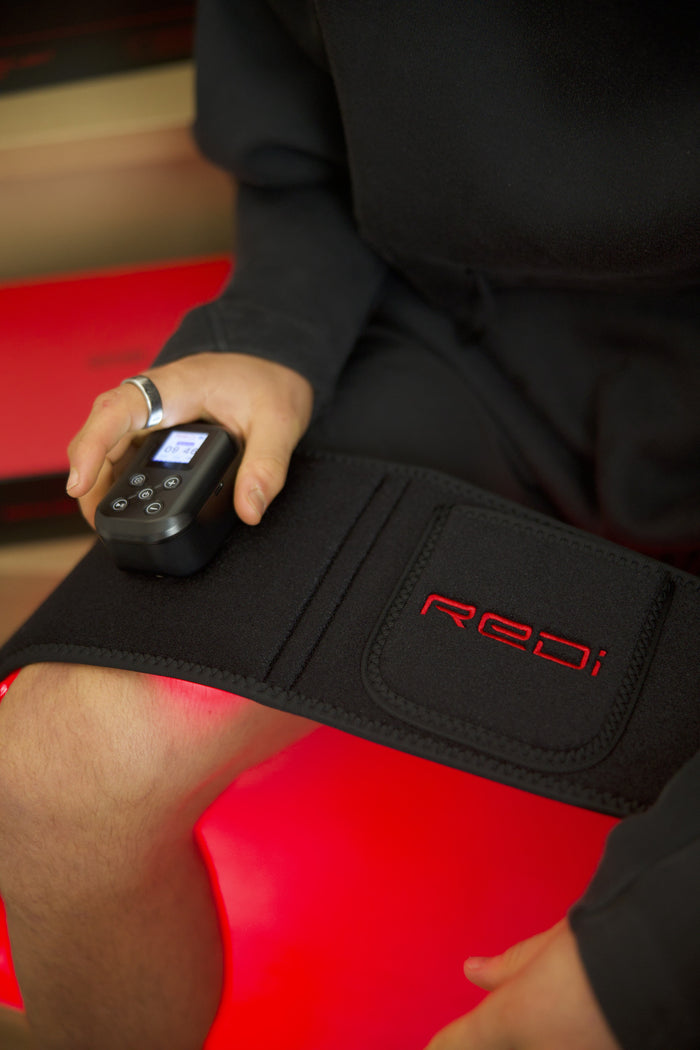
Targeted red light
REDi Anywhere Precision
Wireless red + near-infrared wrap for the back, shoulders or hips. Ten minutes while the boots run on the legs.
$449.00$337.00
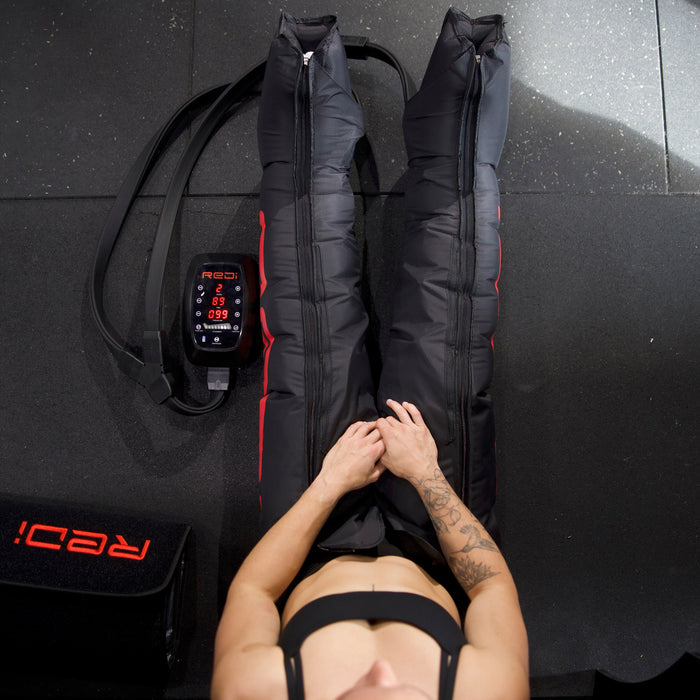
The step up
REDi | R2 Compression Boots
Eight chambers, zone control, 4–6 hour battery. The boot we use in the clinic all day.
$1,199.00$899.00
60 days to decide. Use it properly for at least two weeks. Not earning its place? Send it back in its packaging for a full refund. Return postage is on you.
Legs that are ready tomorrow. Nothing to untangle tonight.
Strap in, press once, let the boots finish the day for you. 60 days to decide. Be REDi.